

Introduction: Why Data Ethics Matter More Than Ever
- Introduction: Why Data Ethics Matter More Than Ever
- The Foundation of Data Handling Ethics
- Universal Ethical Principles for Data Management
- Global Privacy Law Frameworks
- Common Unethical Data Practices and How to Avoid Them
- Building an Ethical Data Culture
- Data Ethics and Governance Integration
- The Business Case for Ethical Data Handling
- Emerging Challenges in Online Data Ethics
- Implementation Best Practices
- Future Considerations
- Conclusion
- Example: Code of Ethics for Data Management
In today’s digital landscape, data has become the new currency of business success. Organizations worldwide collect, process, and analyze vast amounts of information daily, making decisions that affect millions of lives. However, with great power comes great responsibility. Data handling ethics represent the principles and practices that ensure data is collected, stored, managed, and used in ways that respect human dignity, promote fairness, and maintain trust.
Data ethics are not merely about compliance with regulations; they are about social responsibility. Organizations that prioritize ethical data handling build stronger relationships with stakeholders, reduce operational risks, and create sustainable competitive advantages. Conversely, unethical data practices can result in devastating consequences, including loss of reputation, customer exodus, legal penalties, and in some cases, direct harm to individuals whose data has been misused.
The Foundation of Data Handling Ethics
Core Principles
Data handling ethics center on several fundamental concepts that organizations must understand and implement:
Impact on People: Every data point represents characteristics of individuals and influences decisions that affect people’s lives. This reality creates an imperative to manage data quality and reliability with the utmost care. Whether data directly identifies individuals or not, it can still be used to make decisions that significantly impact people’s opportunities, relationships, and quality of life.
Potential for Misuse: The power of data comes with inherent risks. Misusing data can negatively affect both individuals and organizations, creating an ethical imperative to prevent data misuse through proper governance, controls, and oversight mechanisms.
Economic Value Recognition: Data possesses significant economic value, and the ethics of data ownership determine how this value can be accessed and by whom. Organizations must carefully consider who owns data, who can benefit from it, and under what circumstances it can be shared or monetized.
The Evolution of Data Responsibility
The data environment continues evolving rapidly, with organizations using data in ways unimaginable just a few years ago. While laws attempt to codify ethical principles, legislation cannot keep pace with the risks associated with technological advancement. This gap makes it crucial for organizations to recognize and respond to their ethical obligations proactively, fostering cultures that value ethical information handling regardless of legal requirements.
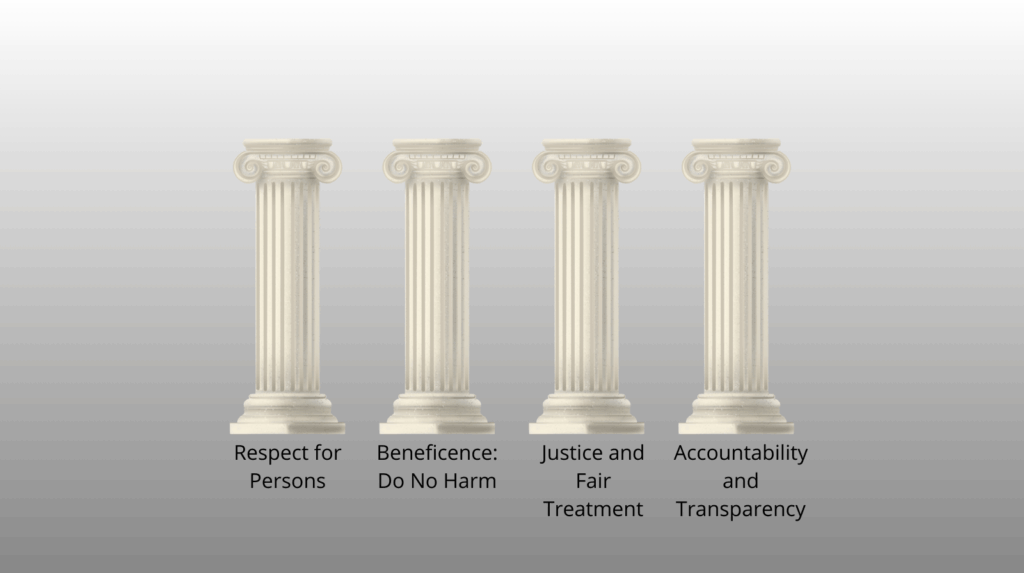
Universal Ethical Principles for Data Management
Respect for Persons
This principle reflects the fundamental requirement that people be treated in ways that respect their dignity and autonomy as human individuals. In data management contexts, this means considering how data processing affects people’s freedom of choice and ensuring that individuals with diminished capacity receive extra protection.
Organizations must ask themselves: Do we design information systems that limit autonomy or freedom of choice? Have we considered how data processing may affect people with disabilities? Does our data processing occur based on informed, valid consent?
Beneficence: Do No Harm
The principle of beneficence has two components: first, do not harm; second, maximize possible benefits while minimizing potential harms. Ethical data practitioners should identify stakeholders and consider the outcomes of data processing, working to maximize benefits and minimize risks of harm caused by their processes.
Key questions include: Are processes designed assuming zero-sum outcomes rather than win-win situations? Is data processing unnecessarily invasive, and are there less risky ways to meet business needs? Does our data handling lack transparency in ways that might hide potential harm?
Justice and Fair Treatment
This principle ensures fair and equitable treatment of all people. Organizations must examine whether people or groups are being treated unequally under similar circumstances, whether process outcomes result in disproportionate benefits or harms to certain groups, and whether machine learning systems are trained using datasets that inadvertently reinforce cultural prejudices.
Accountability and Transparency
Modern data ethics require organizations to be accountable for their data handling practices and transparent about their processes. This includes maintaining clear documentation of data sources, processing methods, and decision-making criteria, as well as providing individuals with information about how their data is being used.
Global Privacy Law Frameworks
European General Data Protection Regulation (GDPR)
The GDPR represents one of the most comprehensive approaches to data protection, establishing seven key principles:
- Fairness, Lawfulness, Transparency: Personal data must be processed lawfully, fairly, and transparently
- Purpose Limitation: Data collection must be for specified, explicit, and legitimate purposes
- Data Minimization: Data collection must be adequate, relevant, and limited to necessary purposes
- Accuracy: Data must be accurate and kept up-to-date
- Storage Limitation: Data should be kept only as long as necessary
- Integrity and Confidentiality: Data must be processed securely
- Accountability: Controllers must demonstrate compliance
Canadian Privacy Framework (PIPEDA)
Canada’s approach combines comprehensive privacy protection with industry self-regulation, emphasizing:
- Organizational accountability for personal information
- Clear identification of collection purposes
- Obtaining valid consent
- Limiting collection, use, disclosure, and retention
- Ensuring data accuracy
- Implementing appropriate safeguards
- Maintaining openness about policies
- Providing individual access rights
- Establishing compliance challenge mechanisms
United States Privacy Principles
The US Federal Trade Commission recommends Privacy by Design approaches based on Fair Information Processing Principles:
- Notice/Awareness: Disclosing information practices before collection
- Choice/Consent: Providing options for data use beyond original purposes
- Access/Participation: Enabling consumers to view and contest data accuracy
- Integrity/Security: Taking reasonable steps to ensure data accuracy and security
- Enforcement/Redress: Implementing reliable mechanisms for sanctions
Common Unethical Data Practices and How to Avoid Them
Timing Manipulation
Data can be misrepresented through selective inclusion or omission of data points based on timing. Examples include market manipulation through strategic trading or presenting data during specific periods to create misleading impressions. Organizations must ensure temporal consistency and transparency in their data reporting practices.
Misleading Visualizations
Charts and graphs can present data in misleading ways through scale manipulation, selective data point inclusion, or violation of accepted visual conventions. Ethical data visualization requires maintaining proportional relationships, including relevant context, and following established best practices for visual representation.
Unclear Definitions and Invalid Comparisons
Presenting data without proper context or using inconsistent definitions can mislead audiences. Organizations must provide clear, unambiguous definitions of populations being measured and ensure comparisons use consistent methodologies and criteria.
Bias in Data Collection and Analysis
Bias can be introduced at multiple points in the data lifecycle:
- Data Collection Bias: Collecting data to reach predetermined conclusions rather than objective analysis
- Selection Bias: Using only data that confirms preexisting hunches while ignoring contradictory evidence
- Sampling Bias: Using biased methodologies for sample selection
- Cultural and Contextual Bias: Failing to account for cultural or contextual factors that influence data interpretation
Data Integration Challenges
Data integration presents ethical challenges because data changes as it moves between systems. Key risks include:
- Limited knowledge of data origin and lineage
- Poor data quality without clear quality standards
- Unreliable metadata that may lead to misunderstanding
- Lack of documentation regarding data remediation history
Inadequate Anonymization
Simple obfuscation or redaction may not adequately protect data privacy, especially when:
- Data aggregation still allows individual identification
- Data marking fails to account for all sensitivity levels
- Data masking doesn’t consider downstream analytical uses
- Large datasets enable re-identification through data combination
Building an Ethical Data Culture
Reviewing Current State Practices
Organizations must first understand their existing data handling practices and their alignment with ethical principles. This review should document how well employees understand the ethical implications of current practices and identify gaps between current state and desired ethical behavior.
Identifying Principles, Practices, and Risk Factors
Formalizing ethical practices requires understanding both general principles (such as privacy protection) and industry-specific concerns (such as financial or health data protection). Organizations must align their approach with legal and regulatory requirements while addressing specific risks related to their technology footprint, employee turnover rates, and data collection methods.
Creating Comprehensive Strategies
An effective ethical data handling strategy must include:
- Values Statements: Clear articulation of organizational beliefs regarding truth, fairness, and justice
- Ethical Data Handling Principles: Specific approaches to challenges presented by data, such as respecting individual privacy rights
- Compliance Framework: Understanding of obligations driven by geographic and sector concerns
- Risk Assessments: Identification of likelihood and implications of specific problems
- Training and Communications: Ongoing education and reinforcement of ethical principles
- Roadmap: Timeline with management-approved activities for implementation
- Auditing and Monitoring: Systems to ensure compliance with ethical principles
Adopting Socially Responsible Risk Models
Data professionals working with business intelligence, analytics, and data science often handle sensitive information about individuals’ identities, activities, locations, financial status, and social connections. This data can easily be misused, making it essential to adopt ethical perspectives that look beyond organizational boundaries to consider implications for the wider community.
Projects using personal data should employ disciplined approaches that account for:
- Population selection methods for studies
- Data capture procedures and safeguards
- Analytical focus areas and methodologies
- Result accessibility and distribution controls
Data Ethics and Governance Integration
Oversight for appropriate data handling falls under both data governance and legal counsel. Together, they must stay current with legal changes and reduce ethical impropriety risks by ensuring employee awareness of their obligations. Data governance must establish standards and policies for data handling practices while providing oversight and protection for employees who report potential breaches.
Key governance responsibilities include:
- Setting and enforcing data handling standards
- Reviewing plans and decisions from business intelligence and analytics teams
- Ensuring fair employee treatment and protection from retaliation
- Maintaining non-interference policies regarding personal lives
- Providing clear escalation paths for ethical concerns
The Business Case for Ethical Data Handling
Ethical data handling increasingly represents a competitive business advantage. Organizations that prioritize ethical practices experience:
- Increased Trustworthiness: Both organizational and data credibility improve with stakeholders
- Better Stakeholder Relationships: Ethical behavior fosters stronger connections with customers, partners, and regulators
- Risk Reduction: Proper governance and controls reduce risks of data misuse by employees, customers, or partners
- Enhanced Reputation: Organizations known for ethical data handling attract customers and talent
- Legal Compliance: Ethical practices typically exceed legal requirements, reducing compliance risks
Emerging Challenges in Online Data Ethics
The digital environment presents unique ethical challenges that organizations must address:
Data Ownership Rights
Individuals should have rights to control their personal data in relation to social media sites and data brokers. Downstream aggregators can embed personal data into deep profiles without individual awareness, creating transparency and consent challenges.
Right to be Forgotten
Individuals should have options to have information erased from the web, particularly to manage online reputation. This concept connects to broader data retention practices and the balance between permanent record-keeping and individual privacy rights.
Digital Identity Protection
People should have rights to expect accurate identity representation and options for private identity management. This includes protection from identity theft, impersonation, and unwanted data association.
Online Freedom of Expression
Balancing individual rights to express opinions with community needs to prevent bullying, harassment, and harmful content requires careful ethical consideration and clear policy frameworks.
Implementation Best Practices
Training and Education
Organizations must implement comprehensive training programs that include:
- Review of ethical codes and their implications
- Real-world case studies and scenarios
- Regular refresher training and updates
- Annual ethics statement affirmations
- Clear communication channels for questions and concerns
Monitoring and Enforcement
Effective ethical data programs require:
- Regular auditing of data handling practices
- Automated monitoring systems for policy violations
- Clear consequences for unethical behavior
- Protection for whistleblowers who report concerns
- Continuous improvement based on lessons learned
Technology Implementation
Supporting ethical data handling requires appropriate technology infrastructure:
- Access controls and authentication systems
- Data lineage and metadata management
- Quality monitoring and validation tools
- Privacy-preserving analytical techniques
- Secure data sharing and collaboration platforms
Future Considerations
As technology continues evolving, organizations must remain vigilant about emerging ethical challenges:
Artificial Intelligence and Machine Learning
AI systems require special attention to bias prevention, algorithmic transparency, and accountability for automated decisions that affect individuals’ lives.
Internet of Things (IoT)
Connected devices create new data collection opportunities and privacy challenges that require careful ethical consideration.
Cross-Border Data Transfers
Globalization requires understanding diverse cultural and legal approaches to data privacy and ethics across different jurisdictions.
Emerging Technologies
New technologies such as blockchain, quantum computing, and advanced analytics create novel ethical challenges that organizations must anticipate and address proactively.
Conclusion
Data handling ethics represent more than regulatory compliance; they embody an organization’s commitment to social responsibility and human dignity. Organizations that prioritize ethical data practices build trust, reduce risks, and create sustainable competitive advantages while contributing positively to society.
The path forward requires commitment from leadership, comprehensive policies and procedures, ongoing training and education, and continuous monitoring and improvement. By embracing ethical data handling as a core organizational value, companies can harness the power of data while respecting the rights and dignity of the individuals whose information they hold in trust.
The future belongs to organizations that can balance innovation with responsibility, using data to drive business success while maintaining the highest ethical standards. This balance is not just good business practice; it is a moral imperative in our increasingly data-driven world.
Example: Code of Ethics for Data Management
Preamble
This Code of Ethics establishes fundamental principles for the ethical handling of data in all organizational contexts. These principles are derived from universal values of human dignity, justice, compassion, and social responsibility that transcend cultural and religious boundaries.
Core Principles
1. Stewardship and Responsibility
- Data is a trust placed in our care, not a possession to be exploited
- We are accountable for the protection and appropriate use of all data entrusted to us
- Our responsibility extends beyond our immediate organization to the broader community
- We must consider the long-term consequences of our data handling decisions
2. Justice and Fairness
- All individuals deserve equal treatment and consideration in data processing
- We shall not discriminate based on race, gender, religion, nationality, or social status
- Data processing must not create or reinforce unjust advantages or disadvantages
- We commit to identifying and correcting bias in our data systems and processes
3. Truthfulness and Transparency
- We shall not knowingly misrepresent data or its implications
- All data processing activities must be conducted with honesty and integrity
- We will provide clear, accurate information about our data practices
- Transparency shall guide our communications with stakeholders and the public
4. Compassion and Beneficence
- We prioritize human welfare in all data-related decisions
- We shall actively work to prevent harm through our data practices
- Our data processing should contribute to the betterment of society
- We consider the impact of our actions on the most vulnerable members of society
5. Privacy and Dignity
- Every individual has an inherent right to privacy and personal autonomy
- We shall protect personal information with the highest level of care
- Data collection and use must respect human dignity at all times
- Individuals should maintain meaningful control over their personal information
6. Proportionality and Minimalism
- Data collection should be limited to what is necessary and proportionate to legitimate purposes
- We shall not collect, store, or process more data than required
- Retention periods should be minimal and clearly justified
- Data sharing should be restricted to necessary parties and purposes
Specific Obligations
Data Collection
- Obtain explicit, informed consent before collecting personal data
- Clearly communicate the purpose, scope, and duration of data collection
- Provide individuals with the right to withdraw consent at any time
- Implement privacy-by-design principles in all data collection systems
Data Processing and Analysis
- Use data only for stated, legitimate purposes
- Implement robust security measures to protect data integrity
- Regularly audit data processing activities for accuracy and fairness
- Maintain complete documentation of data processing procedures
Data Sharing and Disclosure
- Share data only when legally permitted and ethically justified
- Ensure adequate protection measures are in place for shared data
- Obtain appropriate approvals before engaging in data sharing arrangements
- Respect individuals’ rights to control how their data is shared
Data Quality and Accuracy
- Implement systematic quality control measures for all data
- Correct inaccurate data promptly upon discovery
- Provide individuals with access to their data and correction mechanisms
- Maintain data lineage documentation to track data origins and transformations
Data Security
- Implement comprehensive security measures appropriate to data sensitivity
- Regularly assess and update security protocols
- Promptly report and address any data breaches or security incidents
- Ensure secure disposal of data when no longer needed
Enforcement and Compliance
Individual Responsibilities
- All personnel handling data must receive appropriate ethics training
- Individuals must report suspected violations of this code
- Everyone has a duty to stay informed about relevant laws and best practices
- Personal accountability cannot be delegated to others or systems
Organizational Commitments
- Leadership must demonstrate visible commitment to ethical data practices
- Adequate resources must be allocated to support ethical data handling
- Regular assessments of compliance with this code must be conducted
- Clear procedures for reporting and addressing violations must be established
Continuous Improvement
- This code shall be regularly reviewed and updated as needed
- Stakeholder feedback should be actively sought and considered
- Best practices should be shared with the broader professional community
- Learning from mistakes and failures should be encouraged and documented
Conclusion
Adherence to this code is not merely a professional obligation but a moral imperative. By committing to these principles, we acknowledge our responsibility to use the power of data in service of justice, compassion, and human flourishing. We recognize that our actions today will shape the data environment of tomorrow, and we pledge to ensure that this legacy is one of ethical excellence and social benefit.
This code serves as both a guide for daily decisions and an aspiration for the highest standards of professional conduct. We commit to upholding these principles not only when convenient but especially when facing difficult choices and competing pressures. Through this commitment, we contribute to building a more just, transparent, and trustworthy data ecosystem for all.