
- Why valuing data is so difficult
- Legal frameworks: intellectual property vs data
- Applying intellectual property valuation methods to data
- Ways to monetize data
- From dashboards to data products: practical monetization patterns
- Data-informed decisions: where monetary value actually appears
- Monetization via outcomes, not artifacts
- Conclusion
- References
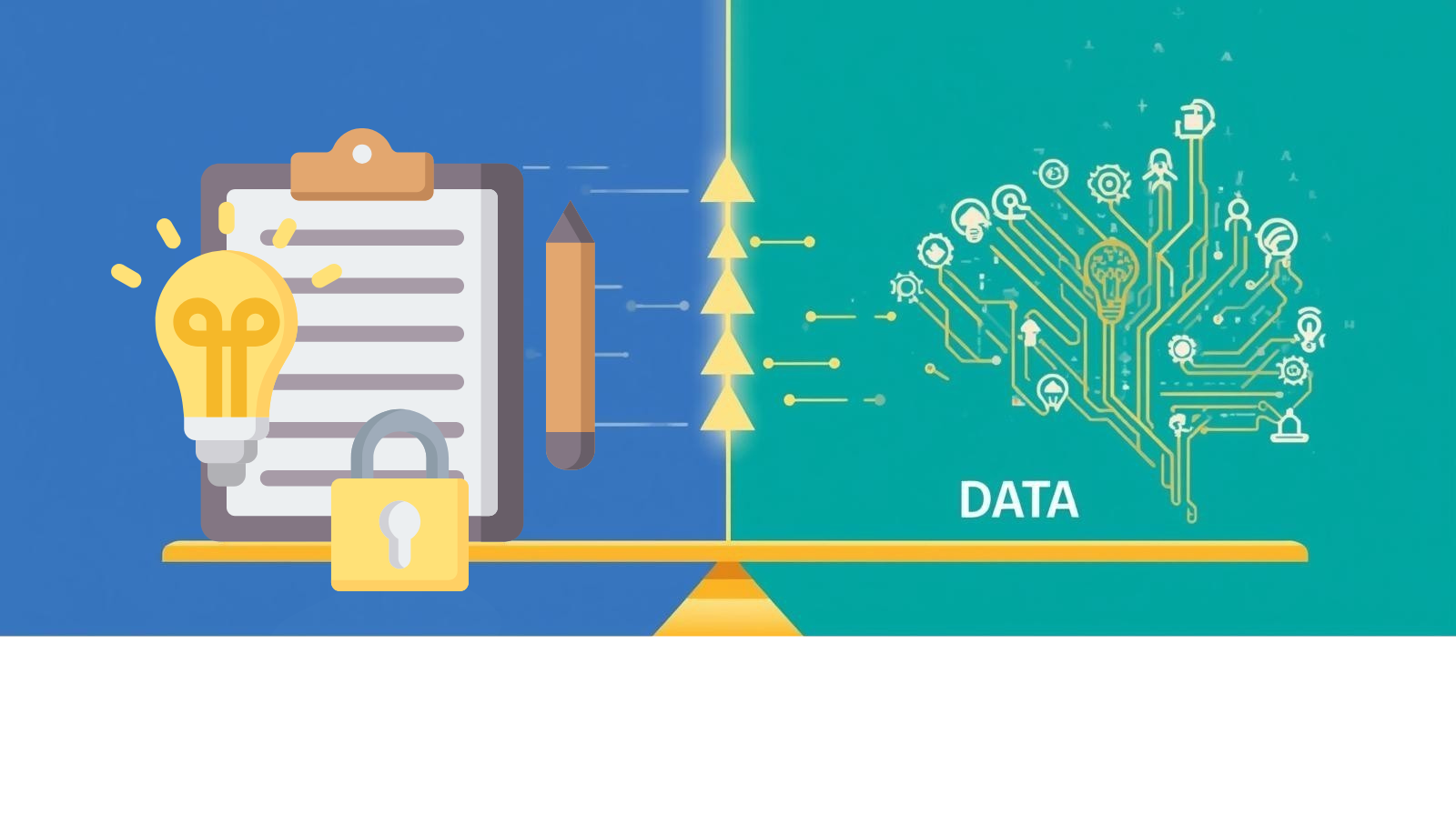
Organizations increasingly recognize that data is one of their most valuable resources. It fuels innovation, enables better decision-making, and creates competitive advantages. Yet, unlike intellectual property, data is rarely assigned a clear monetary value on the balance sheet. Why is that? And can we value data the same way we do with patents, trademarks, or copyrights?
Why valuing data is so difficult
Data is an intangible asset, but it behaves very differently from traditional assets. Whereas intellectual property benefits from legal protection and standardized accounting practices, data has unique properties that complicate valuation.
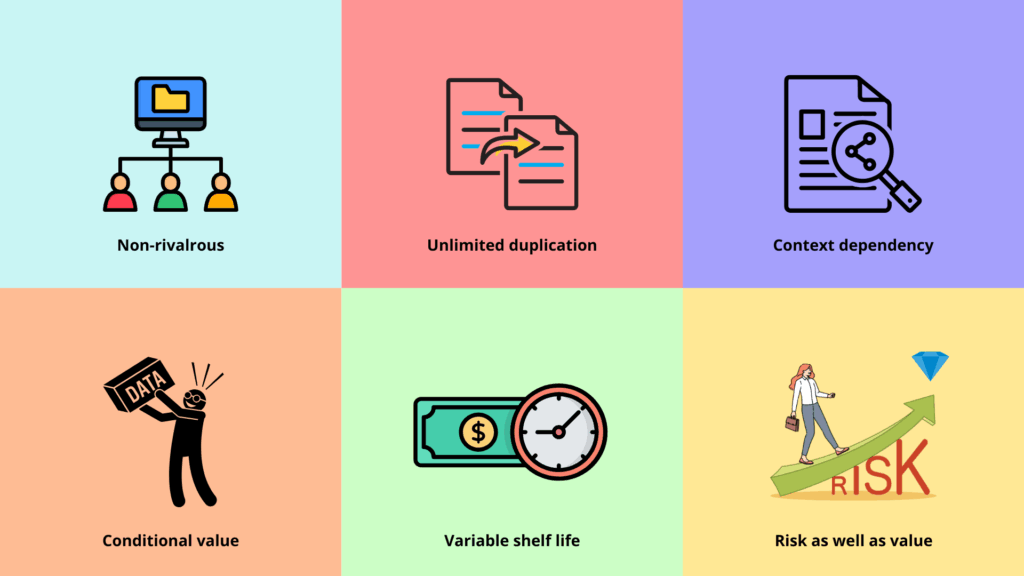
As outlined in the DAMA-DMBOK (Data Management Body of Knowledge), data has distinct characteristics that separate it from other assets:
- Non-rivalrous: multiple people can use the same data simultaneously.
- Unlimited duplication: it can be copied endlessly without losing the original.
- Context dependency: the value of data differs per use case and per organization.
- Conditional value: data only creates value if it is actually used.
- Variable shelf life: old data can either be extremely valuable (e.g., trend analysis) or completely worthless.
- Risk as well as value: data can expose organizations to GDPR fines, breaches, compliance costs, or reputational damage.
These properties make it nearly impossible to apply one universal valuation standard to data, something that is essential for financial reporting.
Legal frameworks: intellectual property vs data
One key difference between intellectual property (IP) and data lies in the legal frameworks that support them.
- Intellectual property benefits from strong protections such as trademark law, copyright law, and patent law. These frameworks create exclusive rights for owners to use, sell, and license their intellectual property. Because of this, accountants can apply established valuation methods, and intellectual property can appear as an intangible asset on the balance sheet. The IFRS (IAS 38) standard explicitly allows for the recognition of IP, but not of data.
- Data, on the other hand, lacks this ownership structure. Data is not registered in a global legal registry, and most organizations manage their own storage. Laws such as the GDPR protect data primarily from unauthorized use or misuse, but not as an asset that can freely be monetized. Regulations around data therefore focus more on restrictions and protection than on ownership and tradeability.
This explains why, even though organizations generate revenue with data, they cannot easily translate it to their balancesheet in the same way as intellectual property.
Applying intellectual property valuation methods to data
Traditional intellectual property valuation standards, such as the income approach, market approach, and cost approach, can also be applied to data. However, the outcomes are far less consistent.
- Income approach: data can be valued based on additional revenues or cost savings (e.g., improved marketing conversion or process automation).
- Market approach: comparison with the prices of similar datasets on data marketplaces.
- Cost approach: calculation of the investment required to collect, clean, and maintain the dataset.
As Daniel Moody & Peter Walsh (1999) demonstrated in their paper Measuring the Value of Information, these methods are useful but insufficient because data has unique “laws” that traditional assets do not obey. For example, data becomes more valuable the more it is used, and it can be infinitely shared without depletion.
Unlike patents or trademarks, data lacks a universally recognized ownership framework, which makes its valuation highly context-dependent. The same dataset may be worth millions to one company and close to nothing to another. Furthermore, data ages quickly, and regulatory risks such as GDPR penalties complicate valuation.
In practice, these methods are helpful for internal projects and ROI calculations, but they are not yet standardized or robust enough for accounting and legal reporting.
Ways to monetize data
Instead of focusing on selling data, organizations should treat data as a product. Data becomes valuable when it delivers insights, context, and actionability. Some proven monetization strategies include:
- Data-as-a-Service (DaaS): Providing real-time access to datasets via subscriptions or APIs.
- Licensing data: Offering controlled access to curated datasets for partners or customers.
- Enabling insights: Transforming raw data into dashboards, analytics, or AI-driven insights that directly support business decisions.
- Operational efficiency: Using internal data to streamline processes, reduce costs, and improve productivity.
- Customer value creation: Leveraging data to personalize services, improve customer experiences, and increase loyalty.
Some people have described data as a new form of capital, alongside financial and human capital. However, without context and productization, raw data remains a byproduct of operations. When handled strategically, data can generate significant recurring revenue streams.
From dashboards to data products: practical monetization patterns
Successful data monetization rarely means “selling raw rows and columns.” Instead, high-performing organizations package insights as data products with clear outcomes and pricing.
In practice, three go-to-market models dominate:
- Indirect monetization: Embedded insights that improve acquisition, engagement, or retention.
- Direct monetization: Paid, packaged analytics with named products, premium tiers, or license models.
- Hybrid or “diamond” model: Self-service exploration, exports, and even delivery of data directly into the customer’s systems.
Real-world examples include e-commerce platforms that provide analytics dashboards to merchants (indirect), delivery apps like Drizly that sell packaged insights to distributors (direct), and SaaS players such as Wix and Atlassian that create entire premium tiers around embedded analytics (hybrid). As highlighted in a Google Cloud webinar on monetization best practices, the key is not to “sell data” but to deliver actionable insights that help customers make better decisions and unlock new revenue streams. Each product should include:
- A clear name and definition.
- Golden KPIs that matter most for the customer.
- Proof of value (e.g., cost savings, efficiency gains, or additional revenue).
- Tiering, licensing, or seat-based pricing to enable scalability.
This approach transforms analytics from a cost center into a profit center, especially when insights are externalized to customers, partners, and broader ecosystems.
Data-informed decisions: where monetary value actually appears
Most organizations over-invest in upstream data work (governance, warehousing, cleansing) and under-invest in decision-making, where value is actually realized.
The shift should be from being “data-driven” to becoming data-informed: combining facts, context, and expert intuition. A practical framework includes:
- Setting the actionable question (not just “what do we know?” but “what decision will this data enable?”).
- Managing the right data, not all the data.
- Ensuring confidence in both data quality and the decision-making process.
- Revealing insights through visualization, but turning them into stories and narratives that drive action.
- Making and executing the decision.
- Relaying and learning from the results.
By framing value in terms of the Cost of Decision, organizations can quantify data’s impact:
- The cost of a wrong decision.
- The cost of no decision.
- The cost of a slow decision.
- The cost of failing to implement the right decision.
This perspective is echoed by thought leaders in decision intelligence, who argue that data monetization should be tied directly to decision outcomes rather than to raw data volumes. As discussed in this session on smarter decision-making with data, true value emerges not from storing more data, but from embedding it into collaborative, informed decisions that directly impact business outcomes.
Monetization via outcomes, not artifacts
The lesson is clear: don’t sell data, sell outcomes.
- Instead of providing rows and columns, deliver decision-ready insights.
- Instead of measuring terabytes, measure business impact.
- Instead of offering access, price your products based on savings or revenue uplift.
By treating data as a strategic product, organizations can finally move beyond cost justification toward profit generation.
Conclusion
Placing data on the balance sheet is still practically impossible due to the absence of standardized accounting rules and the lack of a legal ownership framework. Yet, organizations should not underestimate the monetary value of data in practice.
Collecting, storing, and analyzing data requires continuous investment in people, technology, and governance. These costs only make sense when data is actively used to create measurable benefits.
Whether through direct monetization (selling, licensing, DaaS) or indirect benefits (efficiency, compliance, customer growth), data can be one of the most powerful value drivers in the digital economy. The key is to stop treating data as “just storage” and start managing it as a strategic product, an asset that, when leveraged correctly, delivers sustainable competitive advantage.
References
DAMA DMBOK
Measuring the Value of Information Daniel Moody & Peter Walsh (1999)
Data monetization best practices. Your data is your product – start making money from it
How to Monetize Data Through the SMARTER Methodology